
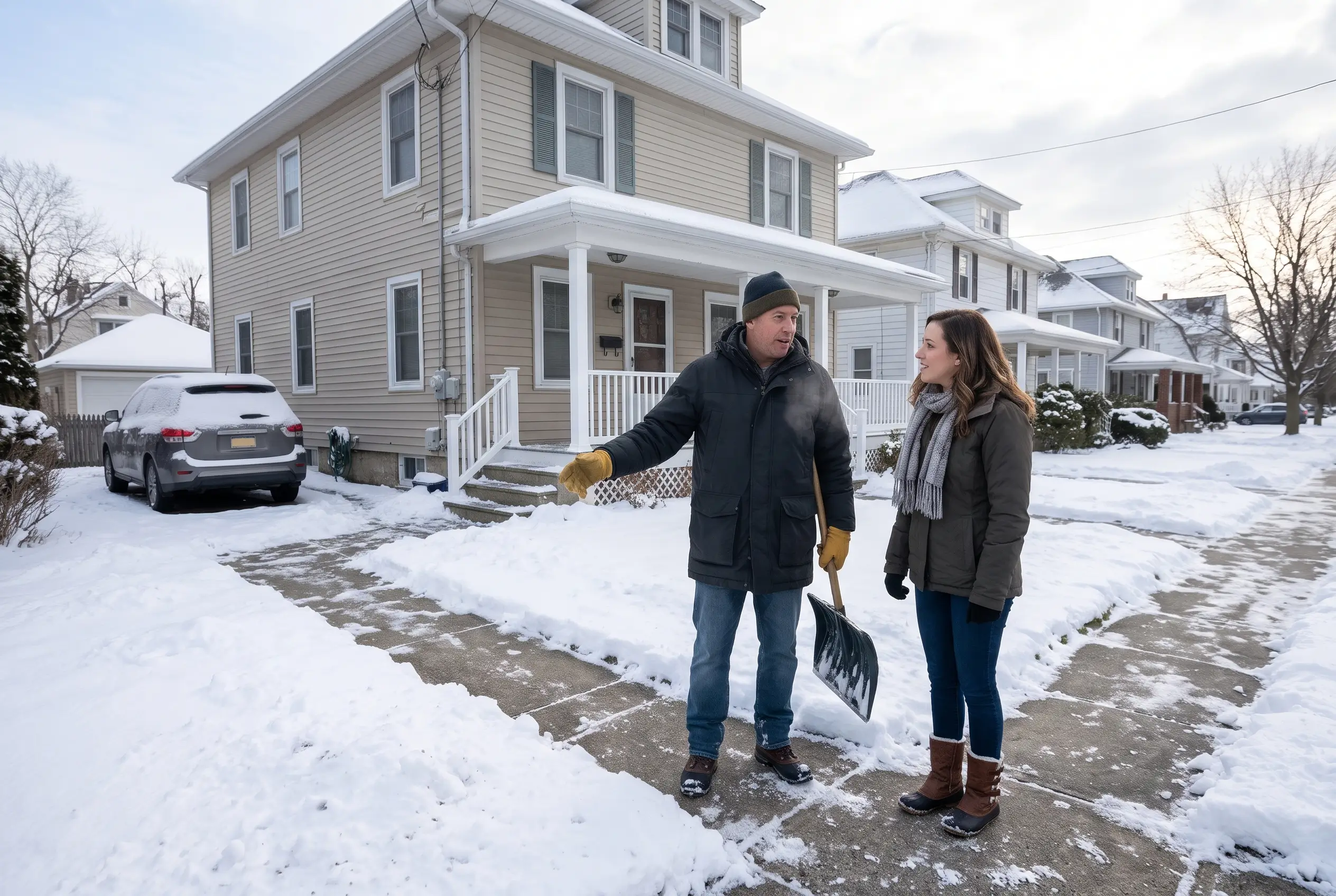
Snow melts in a day. A slip-and-fall lawsuit can drag on for years.
Plenty of New Jersey landlords believe a quick shovel after the storm keeps them safe. The law sees it differently. Your town sets its own clearing deadline, and the courts decide when your duty actually begins. Even a carefully written lease may leave you on the hook.
The landlords who get caught off guard usually missed one small rule. In this article, we will cover who must clear the snow and how landlords can limit their liability.
Key Takeaways
- Local ordinances set sidewalk deadlines, and Hasbrouck Heights requires clearing within 12 hours of daylight.
- Multifamily owners hold a snow removal duty that no lease can transfer.
- Single-family leases can assign shoveling to tenants when the language is clear.
- Courts generally give owners a reasonable window after a storm ends, with exceptions for pre-existing ice.
How New Jersey Law Assigns Snow Removal Duties
New Jersey has no single statewide shoveling law for landlords. Here are the rules that shape a landlord's duty.
Local Ordinances Set the Deadline
State law lets each municipality write its own sidewalk rules. In Hasbrouck Heights, owners or tenants of property next to a sidewalk must remove snow and ice within 12 hours of daylight after it falls or forms. You can read the full rule in the borough's municipal code.
The borough also bans throwing snow into the road. Ignoring these rules has consequences, since failure to comply can result in a borough ordinance summons.
Commercial Owners Carry a Sidewalk Duty
Courts add another layer on top of local ordinances. Under the old common law, neither commercial nor residential owners had to keep the public sidewalk out front clear. Courts later created an exception requiring commercial owners to take reasonable steps, including snow and ice removal.
Rentals sit in a gray area. Courts look at whether a property is predominantly residential. An owner-occupied two-family home may land on the residential side. A property held purely as an investment might not. Classification can be close, so it pays to review your portfolio with a New Jersey attorney.
Snow Rules for Multifamily Rentals
Apartment buildings come with stricter expectations than single-family homes. New Jersey's multiple dwelling regulations spell out clear duties for owners and their staff. Here are the obligations multifamily owners face:
- Owners must keep walkways safe. State rules hold owners responsible at all times for keeping the property free of hazards to residents and anyone nearby. Icy conditions and uncleared snow count as hazards.
- Building staff share the load. Managers and superintendents must handle sidewalks, walkways, parking areas, and driveways after snow or ice. Vehicles and pedestrians need a safe way in and out.
- Leases cannot shift the duty. The regulations state that no contract or lease relieves anyone of these responsibilities. A clause telling apartment tenants to shovel won't protect the owner.
With so much riding on every storm, reliable multi-family property management becomes especially valuable once winter hits.
Snow Rules for Single-Family Rentals
Single-family homes give landlords more flexibility than apartment buildings. The rules still apply, though, and tenants need to know them as well as owners do. Here are the rules that decide who grabs the shovel:
- Local deadlines apply to owners and tenants. Hasbrouck Heights requires the owner or tenant of a property along a sidewalk to clear snow and ice within 12 hours of daylight. Missing that window can lead to a summons.
- Snow cannot go into the street. The borough bans dumping shoveled snow onto public roads or sidewalks. That includes the strip between the curb and the sidewalk.
- Leases can assign shoveling to tenants. Single-family homes fall outside the multiple dwelling regulations that block this shift in apartment buildings. A clear lease clause can put snow duty on the renter.
- Leftover ice still counts as a hazard. Courts can hold owners responsible for ice that remains from an earlier storm. Clearing after one snowfall doesn't cover the next week.
A strong snow clause should list the areas to clear and who supplies the shovel and ice melt. Walking through it at the move-in sets the tone for the whole winter. Strong tenant placement also helps, since responsible renters follow through on lease terms.
KPM Core Services builds clear snow removal terms into every lease, so owners and tenants know exactly who handles each storm.
Ways to Reduce Winter Liability
A little preparation beats a lawsuit every time. Here are the habits that protect owners all season.
Hire a Snow Contractor
Lock in a contractor before the first forecast. Confirm the snow depth that triggers service and the expected response time. Our maintenance services team coordinates vendors so nothing slips through the cracks.
Log Every Clearing
Snap timestamped photos after each cleanup and keep contractor invoices on file. Weather records and contractor logs often become key evidence in winter slip-and-fall claims.
Pre-Treat Before Storms
Spread salt or brine before the first flakes fall. Pre-treating stops ice from bonding to pavement and makes cleanup far easier. Routine property inspections also catch cracked steps and drainage issues that turn into ice traps.
Review Your Insurance
Check your liability limits before winter arrives. Ask your agent whether an umbrella policy makes sense for your portfolio. For more seasonal prep, see our guide to preparing rental properties for New Jersey winters.
Frequently Asked Questions
- No. Borough rules prohibit depositing snow in public streets, on public sidewalks, or between the curb and sidewalk.
- Only when the lease clearly spells it out. Multifamily owners still carry the legal duty, even when costs are shared.
- Most landlord policies include liability coverage. Limits and exclusions vary, so review your policy before winter.
Beat the Next Nor'easter
Snow removal in New Jersey comes down to two questions: who owns the duty and when the clock starts. Local ordinances set the deadline, and in Hasbrouck Heights that window is tight. Your property type decides whether a lease can shift the work to tenants. Apartment owners carry the responsibility no matter what the lease says, while single-family landlords have more room to share it.
Timing matters just as much. Courts generally give owners a reasonable window after a storm ends, but leftover ice from an earlier snowfall can still lead to trouble. Owners who plan ahead, document their efforts, and keep tenants informed stay safe and avoid costly claims.
Stay ahead of every storm with KPM Core Services
Let KPM Core Services coordinate snow contractors and tenant reminders all winter long. Schedule a consultation with our property managers today.
Schedule a consultation